
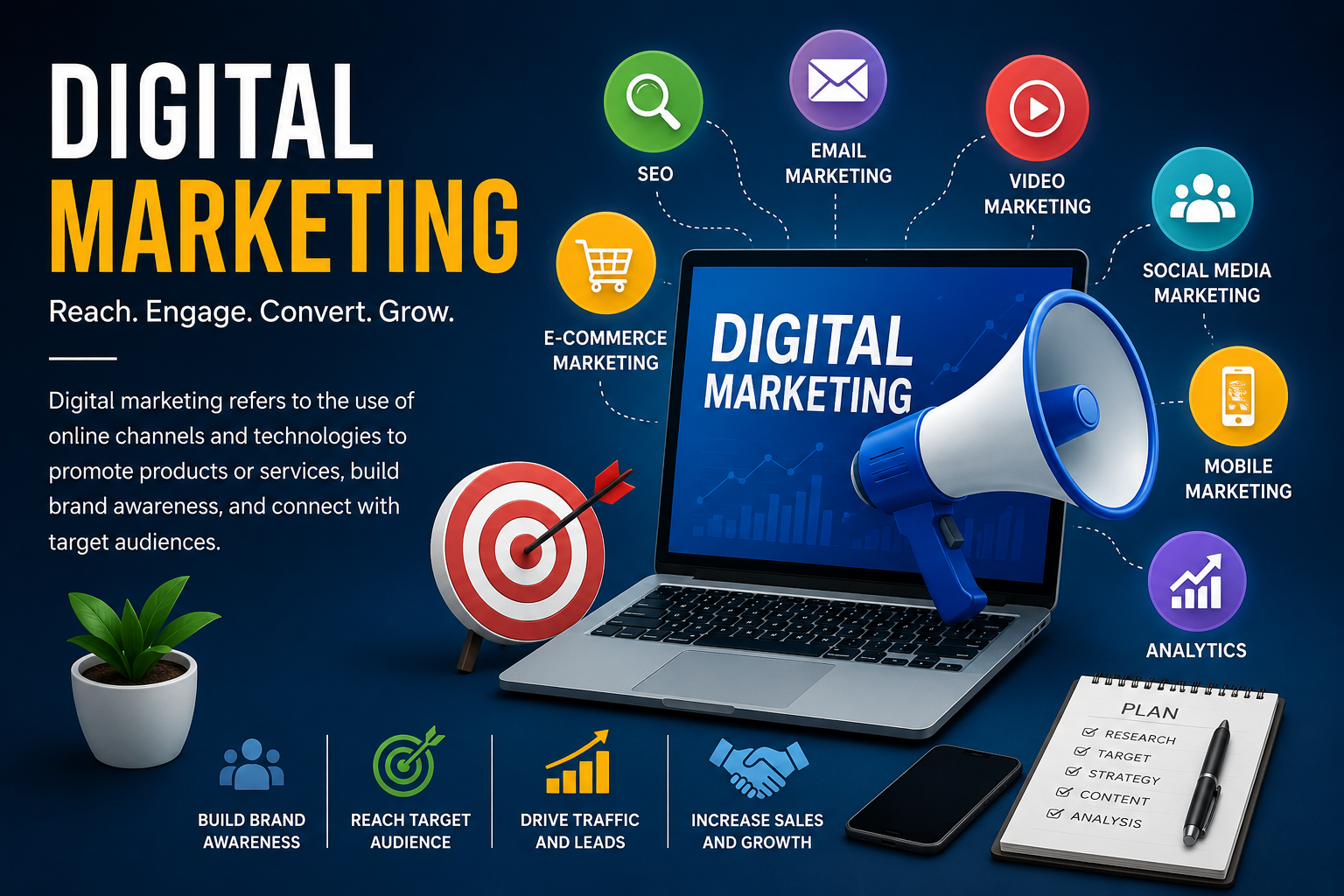
Digital marketing refers to the promotion of products, services, or brands through digital channels and technologies. These channels include websites, search engines, social media platforms, email, mobile applications, and other online platforms.
Unlike traditional marketing, digital marketing allows businesses to interact directly with customers, track campaign performance in real time, and make data-driven decisions to improve results.
The primary goal of digital marketing is to connect with potential customers where they spend most of their time—online.
Why Is Digital Marketing Important?
The internet has become an integral part of daily life. People use search engines to find information, social media to connect with others, and online stores to make purchases. As a result, businesses must establish a strong online presence to remain competitive.
Here are some key reasons why digital marketing is important:
1. Global Reach
Digital marketing allows businesses to reach audiences worldwide. A company can promote its products and services to customers across different countries without needing a physical presence.
2. Cost-Effective
Compared to traditional advertising methods, digital marketing is often more affordable. Small businesses can run targeted campaigns with limited budgets and still achieve significant results.
3. Measurable Results
One of the biggest advantages of digital marketing is the ability to measure performance. Businesses can track website traffic, clicks, conversions, and customer behavior using analytics tools.
4. Better Customer Engagement
Digital channels enable businesses to communicate directly with customers through comments, messages, emails, and social media interactions.
5. Higher Conversion Rates
Targeted digital marketing campaigns help businesses reach the right audience at the right time, increasing the likelihood of conversions and sales.
Types of Digital Marketing
Digital marketing consists of several strategies and techniques. Each plays a unique role in helping businesses achieve their marketing goals.
1. Search Engine Optimization (SEO)
SEO is the process of optimizing a website to improve its visibility on search engines such as Google.
The goal of SEO is to rank higher in search engine results pages (SERPs) for relevant keywords. Higher rankings lead to increased website traffic and greater brand exposure.
Key SEO activities include:
- Keyword research
- Content optimization
- Technical SEO
- Link building
- Mobile optimization
2. Content Marketing
Content marketing focuses on creating and sharing valuable, relevant, and consistent content to attract and engage a target audience.
Examples of content marketing include:
- Blog posts
- Articles
- Videos
- Infographics
- E-books
- Podcasts
High-quality content helps build trust, establish authority, and encourage customer action.
3. Social Media Marketing
Social media marketing involves promoting brands and engaging with audiences on platforms such as:
Businesses use social media to share content, build communities, run advertisements, and interact with customers in real time.
4. Pay-Per-Click (PPC) Advertising
PPC is a form of online advertising where businesses pay a fee each time someone clicks on their ad.
Popular PPC platforms include:
PPC campaigns can generate immediate traffic and are highly effective for lead generation and sales.
5. Email Marketing
Email marketing involves sending promotional messages, newsletters, and updates directly to subscribers.
Benefits of email marketing include:
- Building customer relationships
- Promoting products and services
- Increasing customer retention
- Driving website traffic
A well-planned email campaign can deliver a high return on investment (ROI).
6. Affiliate Marketing
Affiliate marketing is a performance-based strategy where businesses reward affiliates for driving traffic or sales through their referral links.
Many online retailers use affiliate programs to expand their reach and increase sales through third-party promoters.
7. Influencer Marketing
Influencer marketing involves partnering with individuals who have a strong online following.
These influencers promote products or services to their audience, helping brands gain credibility and reach new customers.
How Digital Marketing Works
Digital marketing follows a structured process designed to attract, engage, and convert customers.
Step 1: Identify the Target Audience
Businesses first determine who their ideal customers are based on factors such as:
- Age
- Gender
- Location
- Interests
- Buying behavior
Step 2: Create Valuable Content
Relevant and engaging content is developed to address customer needs and interests.
Step 3: Promote Through Digital Channels
Content is distributed through websites, search engines, social media, email campaigns, and paid advertisements.
Step 4: Generate Leads
Potential customers interact with the content and provide contact information or take desired actions.
Step 5: Convert Leads into Customers
Businesses nurture leads through personalized communication and marketing campaigns until they make a purchase.
Step 6: Analyze and Optimize
Marketing performance is continuously monitored using analytics tools to improve future campaigns.
Benefits of Digital Marketing for Businesses
Digital marketing offers numerous advantages that contribute to business growth.
Increased Brand Awareness
Businesses can reach larger audiences and build stronger brand recognition online.
Better Targeting
Advanced targeting options allow marketers to focus on specific demographics, interests, and behaviors.
Improved Customer Experience
Personalized marketing campaigns create more meaningful interactions with customers.
Higher Return on Investment
Digital marketing strategies often produce better results at lower costs compared to traditional advertising.
Real-Time Performance Tracking
Businesses can instantly monitor campaign effectiveness and make adjustments when needed.
Challenges of Digital Marketing
Although digital marketing provides many benefits, it also comes with challenges.
High Competition
With millions of businesses online, standing out can be difficult.
Constant Algorithm Changes
Search engines and social media platforms frequently update their algorithms, requiring marketers to adapt their strategies.
Content Saturation
Consumers are exposed to large amounts of content daily, making it harder to capture attention.
Data Privacy Concerns
Businesses must comply with privacy regulations and protect customer information.
The Future of Digital Marketing
Digital marketing continues to evolve with advancements in technology. Emerging trends include:
- Artificial Intelligence (AI)
- Voice Search Optimization
- Video Marketing
- Marketing Automation
- Personalized Customer Experiences
- Augmented Reality (AR) Advertising
Businesses that embrace these innovations will be better positioned to meet changing consumer expectations and remain competitive.
Conclusion
Digital marketing is the practice of promoting products, services, and brands through digital channels such as websites, search engines, social media, email, and online advertising platforms. It has become an essential component of modern business strategies because it offers greater reach, measurable results, cost efficiency, and improved customer engagement.
From SEO and content marketing to social media and paid advertising, digital marketing provides businesses with powerful tools to attract, engage, and convert customers. As technology continues to evolve, digital marketing will play an even more significant role in shaping how businesses connect with their audiences.
Whether you are a business owner, student, or aspiring marketer, learning digital marketing can open new opportunities and help you thrive in the digital age.
Far far away, behind the word mountains, far from the countries Vokalia and Consonantia, there live the blind texts. Separated they live in Bookmarksgrove right at the coast
Far far away, behind the word mountains, far from the countries Vokalia and Consonantia, there live the blind texts. Separated they live in Bookmarksgrove right at the coast
Far far away, behind the word mountains, far from the countries Vokalia and Consonantia, there live the blind texts. Separated they live in Bookmarksgrove right at the coast
Far far away, behind the word mountains, far from the countries Vokalia and Consonantia, there live the blind texts. Separated they live in Bookmarksgrove right at the coast